How to Export Textiles from Pakistan: Complete Compliance & Logistics Guide
Master the complete export process from Pakistan with regulatory requirements, documentation, certifications, logistics, and best practices for textile exporters entering international markets.
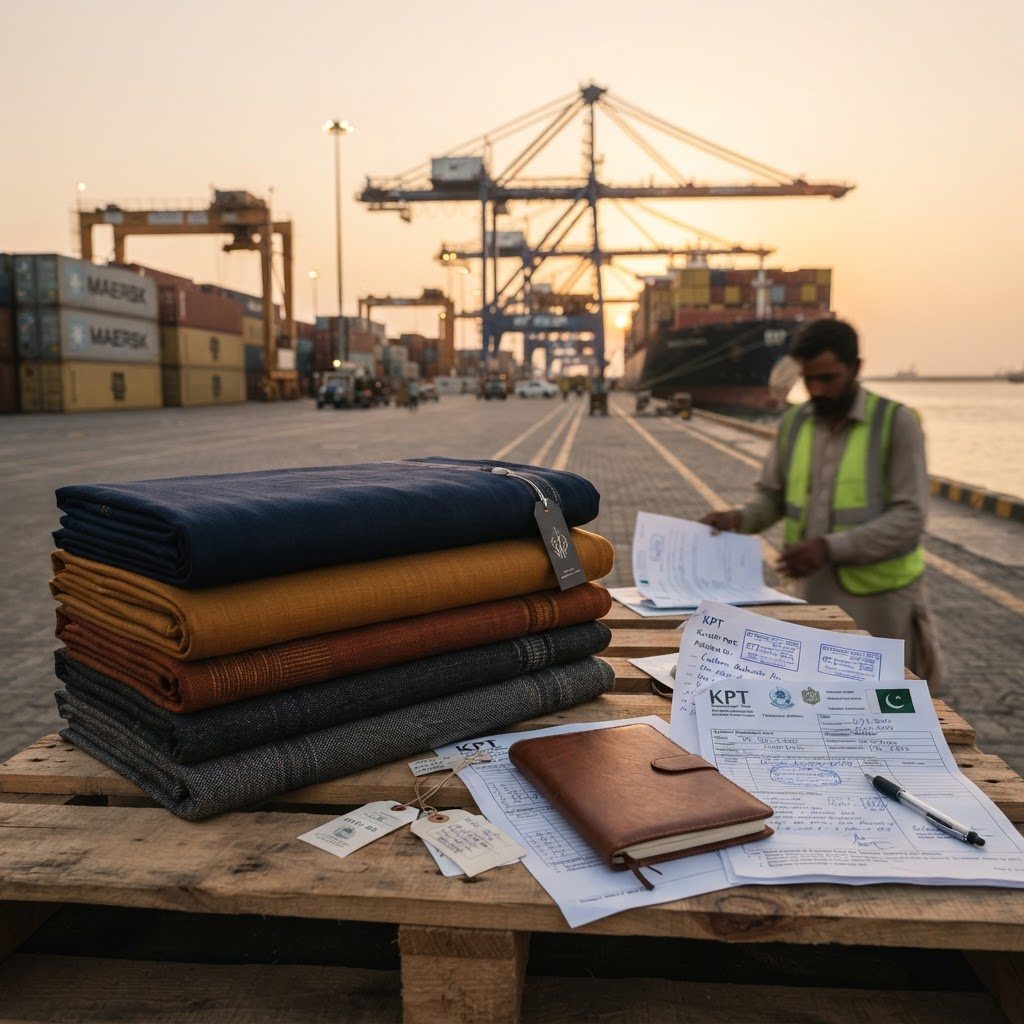
How to Export Textiles from Pakistan: Complete Compliance & Logistics Guide
Exporting textiles from Pakistan is one of the fastest ways to grow revenue, but navigating customs, certifications, shipping logistics, and buyer compliance is complex. This guide walks you through every step — from registering as an exporter to delivering your first shipment.
Step 1: Register as a Textile Exporter
Federal Board of Revenue (FBR) Registration
Chamber Membership (Recommended)
- **Karachi Chamber** (for port-based exports)
- **Faisalabad Chamber** (for fabric/spinning exports)
- **Lahore Chamber** (for garment exports)
- **Sialkot Chamber** (for accessories/trims)
Chamber membership provides trade intelligence, networking, and official certifications that buyers trust.
Step 2: Obtain Required Certifications
Buyers in the EU, USA, and other developed markets expect proof of compliance. The most demanded certifications:
Quality & Safety Certifications
Social Compliance Certifications
Sector-Specific Certifications
**Cost and Timeline:** Most certifications cost PKR 100,000–500,000 and take 4–12 weeks to obtain.
Step 3: Prepare Essential Export Documentation
Before Shipping
Key Documents to Understand
Step 4: Find a Reliable Freight Forwarder and Shipping Partner
Your freight forwarder is critical. They handle:
Key Shipping Hubs in Pakistan:
Typical Container Sizes for Textiles:
Cost Estimates (FOB Karachi, as of 2026):
Step 5: Understand Buyer Compliance Requirements
Different buyers (retailers, wholesalers, distributors) have different requirements:
Major Retailers (Walmart, H&M, Next)
Mid-Market Importers
Small/Direct-to-Consumer Buyers
Step 6: Pricing Strategy for International Markets
Exporting is margin-thin. Understand your cost structure:
Typical Costs for a Cotton Towel (per unit FOB Karachi)
Buyers in the USA/EU expect FOB prices; they add their own margin (often 2.5–3x the FOB price).
Step 7: Common Pitfalls and How to Avoid Them
| Pitfall | Solution |
|---------|----------|
| **Misses export deadlines** | Plan timelines: sampling (2–3 weeks) → approval (1 week) → manufacturing (4–12 weeks) → shipping (3–6 weeks) → buffer |
| **Buyer rejects shipment for minor defects** | Implement strict QC: internal inspection → third-party lab testing → pre-shipment inspection |
| **Currency risk** | Lock in prices via forward contracts; don't quote in PKR to foreign buyers |
| **Payment disputes** | Always use Letter of Credit or prepayment for first-time buyers; trusted repeat buyers can use open account |
| **Wrong certifications** | Ask the buyer *exactly* which certifications they need before manufacturing; many small buyers don't require WRAP/BSCI |
| **Poor documentation** | Use a freight forwarder who knows Pakistani customs; even small mistakes delay shipments |
Step 8: Marketing Yourself as an Exporter
Once certified and experienced:
Export Timeline: Start to First Shipment
| Phase | Duration |
|-------|----------|
| FBR/Chamber registration | 2–4 weeks |
| Certifications (ISO, OEKO-TEX) | 4–12 weeks |
| Finding buyer & negotiating | 2–8 weeks |
| Sampling & approval | 2–3 weeks |
| Manufacturing bulk order | 4–12 weeks (depends on product) |
| Shipping & logistics | 3–6 weeks |
| **Total, First Export** | **4–6 months** |
| **Repeat Orders** | **2–3 months** (faster sampling) |
Key Takeaway
Exporting textiles from Pakistan is lucrative but requires careful planning: registrations, certifications, buyer compliance, and logistics coordination. Start small (1–2 containers), build buyer relationships, and scale. Most successful Pakistani exporters spend 6–12 months building processes before their first major repeat order.
Next Steps:
1. Register your business with FBR and your local Chamber.
2. Identify your niche (towels, garments, fabric, trims).
3. Get ISO 9001 as a baseline certification.
4. Find 2–3 trusted freight forwarders in Karachi or your city.
5. Connect with buyers through trade shows and online directories like TEP.
Related Articles
Textile Waste in Pakistan: The Circular Economy Opportunity Nobody's Fully Captured Yet
Pakistan's textile mills generate cotton, fiber, and fabric waste at every stage of production. Learn where it comes from, why it is valuable, and how TEP is connecting verified suppliers with circular economy buyers.
Terry & Bath Towel Manufacturers in Pakistan: A Buyer's Guide to Sourcing
Pakistan produces some of the world's most traded terry and bath towels. Learn how global buyers verify, compare, and source towel manufacturers and exporters through TEP's infrastructure.
How AI Technology Can Help You Build a Textile Export Business
Learn how AI can help Pakistani textile exporters find buyers, improve pricing, manage compliance, forecast demand, and scale global sales with TEP and AI employees.