The EU Digital Product Passport: What Pakistani Textile Exporters Need to Know Before 2027
The EU's Digital Product Passport will become mandatory for textiles by 2027–2028. Here's what it requires, the real timeline, and how Pakistani exporters can prepare.
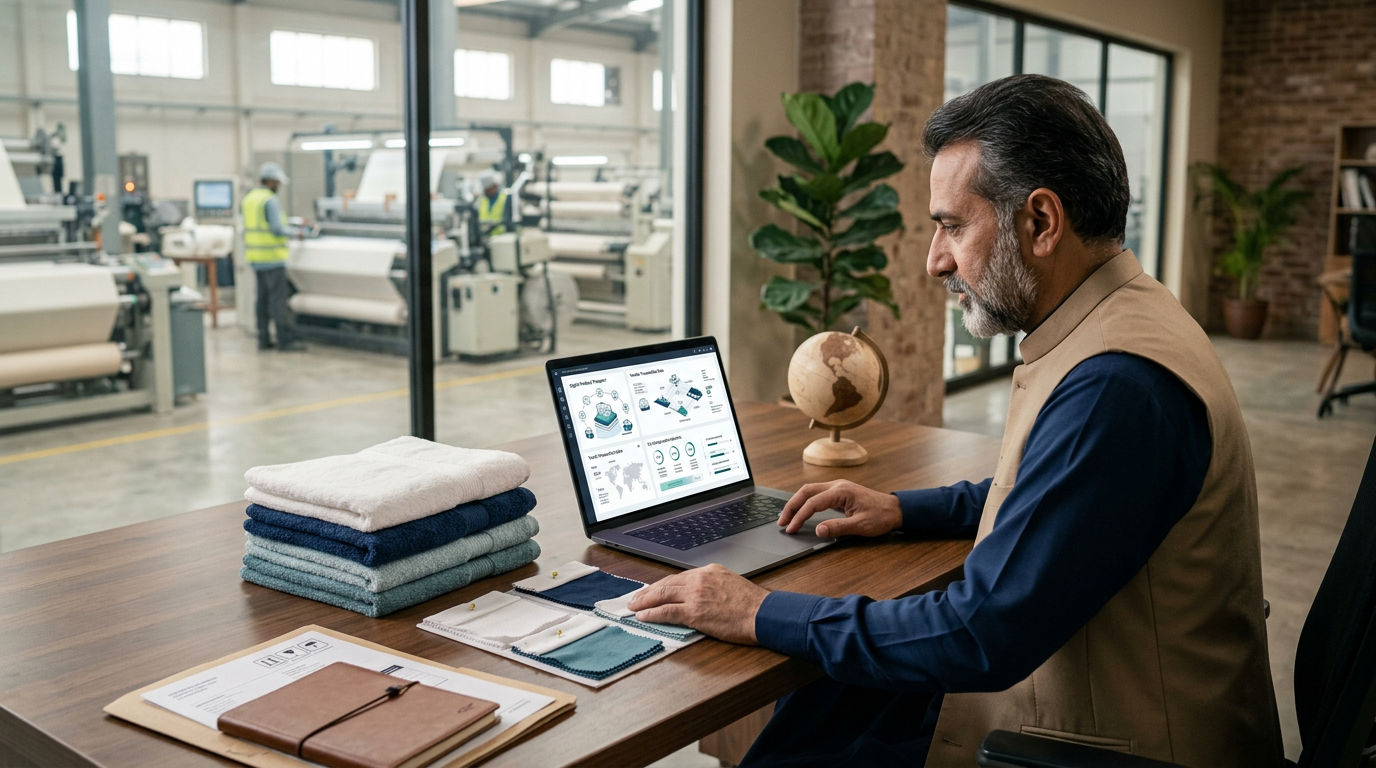
The EU Digital Product Passport: What Pakistani Textile Exporters Need to Know Before 2027
If you export textiles to the EU, you've probably heard the term "Digital Product Passport" mentioned in a buyer email, trade seminar, or compliance newsletter — usually without a clear explanation of what it actually requires or when it applies to you. This is worth understanding now, not in 2027, because the requirement is coming and the businesses that prepare early will be the ones still shipping without disruption when it lands.
What the Digital Product Passport Actually Is
The Digital Product Passport connects a physical product to structured digital information that can be accessed by the people and organizations entitled to use it, replacing reliance on labels and disconnected paperwork. It's built on the EU's Ecodesign for Sustainable Products Regulation (ESPR), a framework law that applies different specific requirements to each product category through separate delegated acts.
The European Commission is developing textile-specific requirements with input from its Joint Research Centre and ongoing stakeholder consultation across the textile industry. In May 2026, that research centre published a draft content specification proposing roughly 49 data points a textile DPP would need to cover — grouped into product identification, producer identification, environmental data, and traceability data.
The Real Timeline — Not the Rumor Version
There's conflicting information online about exactly when this becomes mandatory. Here's what's confirmed as of late 2026:
Why This Matters for Pakistani Exporters
Roughly two-thirds of apparel sold in the EU is produced outside the Union, which means this regulation is built around the kind of cross-border supply chains Pakistani textile exporters operate in.
What to Do Between Now and Then
You do not need a finished compliance system today — the delegated act itself is still being finalized. But exporters can start building the groundwork now:
1. **Centralize existing records.** Put material composition, mill of origin, dye-lot records, and certifications into one structured digital format.
2. **Ask buyers what they already request.** Treat EU traceability questionnaires as an early preview of future DPP data fields.
3. **Digitize before the final rules.** Structured product data and verified supplier records improve buyer trust and sourcing speed today, independent of the regulation.
Where TEP Fits Into This
TEP's directory is built around verified, structured exporter data rather than static PDFs or brochure-style listings — the same underlying discipline the Digital Product Passport is asking the industry to adopt. As the textile-specific delegated act firms up, exporters who already have product and production data structured digitally will have far less to rebuild than those starting from paper records in 2028.
TEP is building the digital infrastructure connecting Pakistan's textile industry to verified global buyers and helping exporters get ahead of compliance shifts like the EU Digital Product Passport before they become mandatory. Explore the [TEP directory](https://textileexporterspakistan.com/directory) and [AI Employees](https://textileexporterspakistan.com/ai-employees) to learn more.
Related Articles
Why 60-70% of Letters of Credit Get Rejected — And How Textile Exporters Can Avoid It
Most letter of credit rejections have nothing to do with the goods shipped — they are paperwork mismatches. Learn why LC discrepancies happen in textile exports and how to prevent payment delays.
How German Buyers Search for Towel & Bathrobe Suppliers — And Where Pakistan Fits
Learn the German B2B search terms importers use for towels, bathrobes, and Frottierwaren, and how Pakistan's verified textile manufacturers can become easier to find.
Textile Waste in Pakistan: The Circular Economy Opportunity Nobody's Fully Captured Yet
Pakistan's textile mills generate cotton, fiber, and fabric waste at every stage of production. Learn where it comes from, why it is valuable, and how TEP is connecting verified suppliers with circular economy buyers.