Why 60-70% of Letters of Credit Get Rejected — And How Textile Exporters Can Avoid It
Most letter of credit rejections have nothing to do with the goods shipped — they are paperwork mismatches. Learn why LC discrepancies happen in textile exports and how to prevent payment delays.
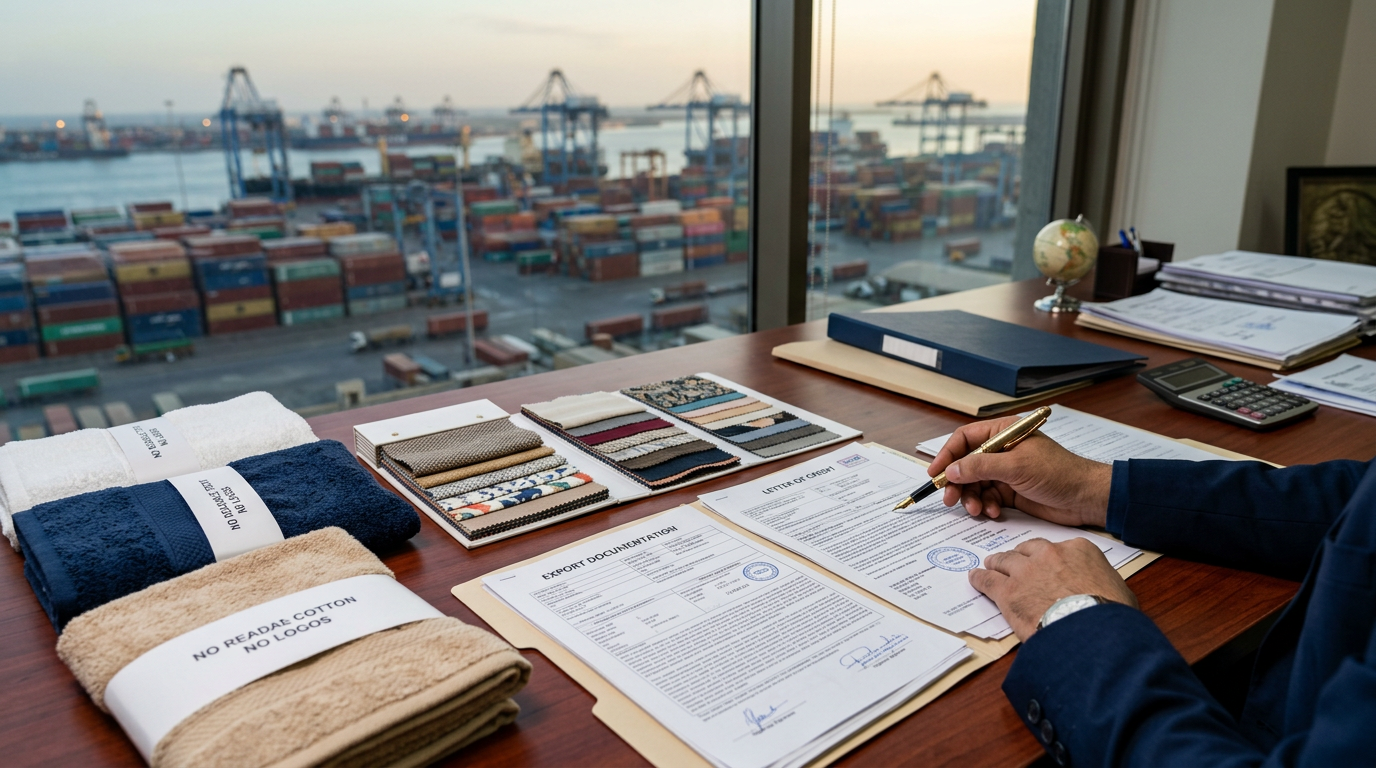
Why 60-70% of Letters of Credit Get Rejected — And How Textile Exporters Can Avoid It
A container ships on time, the goods match the order exactly, and the exporter still does not get paid on schedule — because a bill of lading listed the shipment date one day later than the letter of credit allowed. This is not a rare edge case. It is the single most common way exporters lose weeks of cash flow on deals they already delivered correctly.
The Number That Should Worry Every Exporter Using LCs
Industry estimates from the International Chamber of Commerce put the rate of document discrepancies on a first letter-of-credit presentation at 60-70%. Multiple independent surveys across decades land in the same range — this is not a one-off statistic, it is a structural pattern in how documentary credits work.
That means the default outcome for a first LC submission is rejection, not acceptance. Most exporters do not know this going in, which is exactly why it keeps happening.
Why the Rejection Rate Is So High
A letter of credit is a bank's promise to pay based entirely on paper compliance, not on whether the goods themselves are correct. The bank is not inspecting your towels or your fabric rolls — it is checking whether every document matches the LC's exact wording, down to spelling, dates, and figures.
A few reasons this trips up even experienced exporters:
What a Discrepancy Actually Costs You
A rejected first presentation does not mean the deal collapses — it means delay, and delay compounds:
1. The exporter has to correct and resubmit, or the buyer's bank has to seek a waiver from the buyer directly.
2. Payment gets held until the correction clears, sometimes for weeks.
3. If the discrepancy is not resolved before the LC's expiry date, the bank's payment guarantee can lapse entirely, leaving the exporter negotiating payment terms with the buyer directly — the exact risk an LC exists to eliminate.
For a textile exporter running on tight production-to-payment cycles, a two-to-three-week delay on one shipment can cascade into cash flow pressure on the next order.
How to Actually Reduce Discrepancies
The fix is not more caution — it is a checklist discipline most exporters build only after getting burned once:
1. **Read the LC terms before production starts, not before shipment.** If the LC specifies a shipment deadline, quantity tolerance, or specific wording for the goods description, that needs to be confirmed as achievable before you commit to the order, not discovered at document-preparation stage.
2. **Cross-check every document against the LC line by line — not against each other.** Documents matching each other but not matching the LC's exact wording is one of the most common blind spots.
3. **Track amendments as they happen.** Any LC amendment should trigger an immediate re-check of every document already in preparation against the new terms.
4. **Build in a buffer before the LC's latest shipment date.** Presenting documents at the very last permissible moment leaves zero room to correct a discrepancy before expiry.
5. **Keep a standing template mapped to your most common Incoterms and buyer markets**, rather than starting the document checklist from scratch on every order.
Where This Fits Into a Bigger Pattern
LC discrepancies are a documentation problem, not a shipping problem — and documentation is exactly the layer that gets harder to manage manually as an exporter scales across more buyers, more markets, and more banks with slightly different interpretations of the same UCP rules. This is one of the clearest cases where structured, checked-against-source documentation — the kind AI-assisted verification is well suited for — turns a 60-70% industry-wide failure rate into something closer to a solved problem for exporters who build the discipline in.
TEP is building the digital infrastructure connecting Pakistan's textile industry to verified global buyers — including the documentation and compliance layer that determines whether a shipment actually gets paid on time. Explore the [TEP directory](https://textileexporterspakistan.com/directory) and [AI Employees](https://textileexporterspakistan.com/ai-employees) to learn more.
Related Articles
The EU Digital Product Passport: What Pakistani Textile Exporters Need to Know Before 2027
The EU's Digital Product Passport will become mandatory for textiles by 2027–2028. Here's what it requires, the real timeline, and how Pakistani exporters can prepare.
How German Buyers Search for Towel & Bathrobe Suppliers — And Where Pakistan Fits
Learn the German B2B search terms importers use for towels, bathrobes, and Frottierwaren, and how Pakistan's verified textile manufacturers can become easier to find.
Textile Waste in Pakistan: The Circular Economy Opportunity Nobody's Fully Captured Yet
Pakistan's textile mills generate cotton, fiber, and fabric waste at every stage of production. Learn where it comes from, why it is valuable, and how TEP is connecting verified suppliers with circular economy buyers.