How German Buyers Search for Towel & Bathrobe Suppliers — And Where Pakistan Fits
Learn the German B2B search terms importers use for towels, bathrobes, and Frottierwaren, and how Pakistan's verified textile manufacturers can become easier to find.
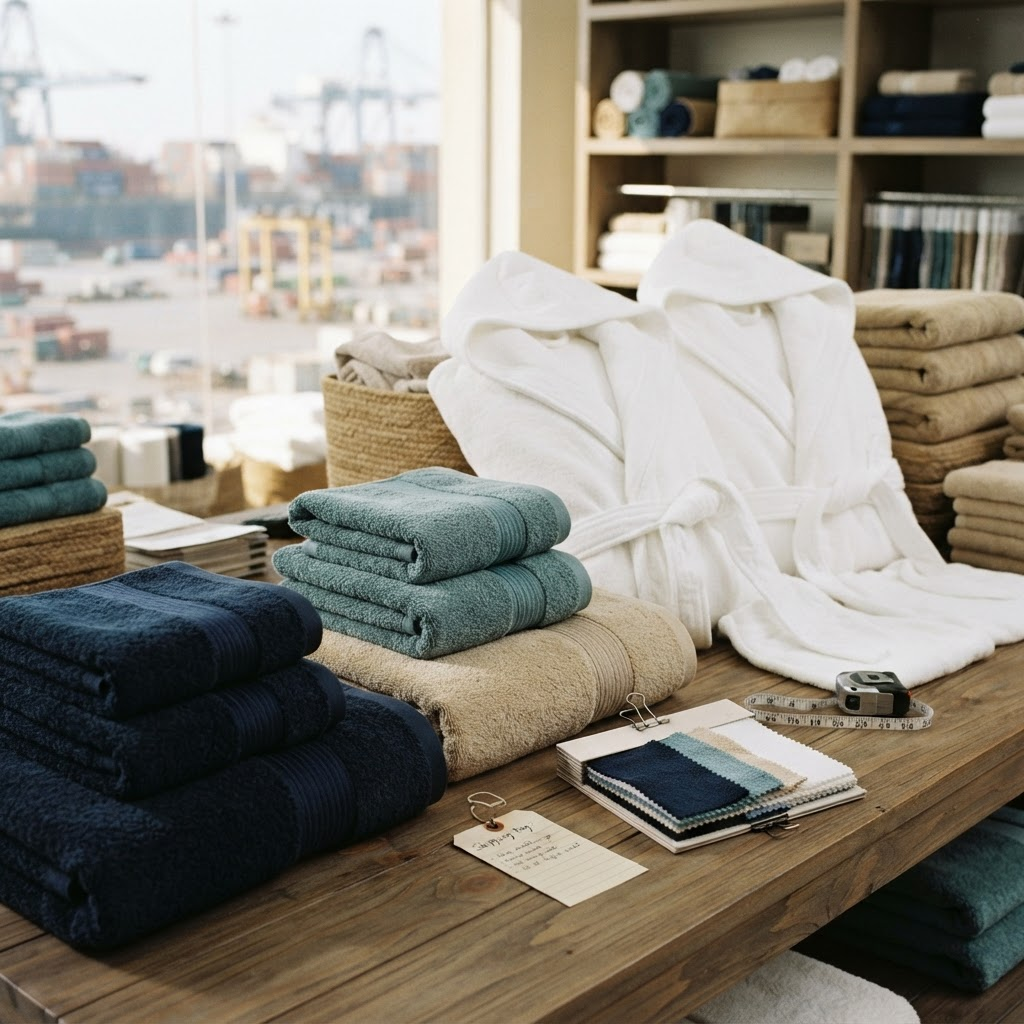
How German Buyers Search for Towel & Bathrobe Suppliers — And Where Pakistan Fits
Germany is one of Europe's largest home textile import markets, and its sourcing language is distinct from the English-language searches most exporters optimize for. A buyer in Hamburg or Munich looking for a towel or bathrobe supplier is not necessarily searching for “bath towel manufacturer.” They are searching in category-specific German B2B terms that do not map one-to-one onto English keywords.
Understanding that gap matters for any exporter trying to be found in this market.
The Terms German Buyers Actually Use
**Frottierwaren** is the umbrella term worth knowing first. It covers the entire terry product category: towels, bathrobes, bath mats, and related goods. German wholesale directories and B2B platforms often organize towel and bathrobe categories under this term.
Beyond that umbrella term, the pattern breaks down by product and buyer intent:
Pakistan Is Already the Reference Point, Not the Newcomer
German B2B platforms already list Pakistani terry manufacturers alongside Turkish and Chinese suppliers as an established sourcing option. Several German-market wholesalers explicitly market supply chains running through Pakistan, using the language above to be found by their own customers.
The competitive question for a Pakistani exporter is not whether the market knows Pakistan makes towels. It is whether a specific manufacturer is findable and verifiable in the same channels where German buyers are already searching: B2B directories, wholesale platforms, and increasingly, AI-assisted search.
Where the Gap Actually Sits
Most Pakistani terry exporters have production capacity and export history but no structured digital presence in the language and format German buyers search in. A buyer typing “Handtücher Hersteller Pakistan” wants a specific, verifiable answer — capacity, certifications, minimum order quantities, and product specifications — not a generic company brochure translated after the fact.
This is the infrastructure gap TEP exists to close: verified data, structured listings, and a sourcing layer that answers a buyer's actual question instead of requiring them to dig through outdated directories or cold-email a list of maybes.
The Practical Takeaway
For manufacturers and exporters working with TEP, this German-language pattern is a signal, not a separate strategy. Buyers across every major import market — Germany included — search in specific, product-and-intent-driven terms. Showing up requires being structured for that search, not simply being listed somewhere.
TEP is building digital infrastructure connecting Pakistan's textile manufacturers to verified buyers across global markets. Explore the [TEP directory](https://textileexporterspakistan.com/directory) and [AI Employees](https://textileexporterspakistan.com/ai-employees) to learn more.
Related Articles
The EU Digital Product Passport: What Pakistani Textile Exporters Need to Know Before 2027
The EU's Digital Product Passport will become mandatory for textiles by 2027–2028. Here's what it requires, the real timeline, and how Pakistani exporters can prepare.
Why 60-70% of Letters of Credit Get Rejected — And How Textile Exporters Can Avoid It
Most letter of credit rejections have nothing to do with the goods shipped — they are paperwork mismatches. Learn why LC discrepancies happen in textile exports and how to prevent payment delays.
Textile Waste in Pakistan: The Circular Economy Opportunity Nobody's Fully Captured Yet
Pakistan's textile mills generate cotton, fiber, and fabric waste at every stage of production. Learn where it comes from, why it is valuable, and how TEP is connecting verified suppliers with circular economy buyers.