How to Find Verified Textile Exporters in Pakistan (2026 Buyer's Guide)
A comprehensive guide to sourcing verified textile exporters in Pakistan, covering industry hubs, what to check, product categories, and how to ensure a safe sourcing process.
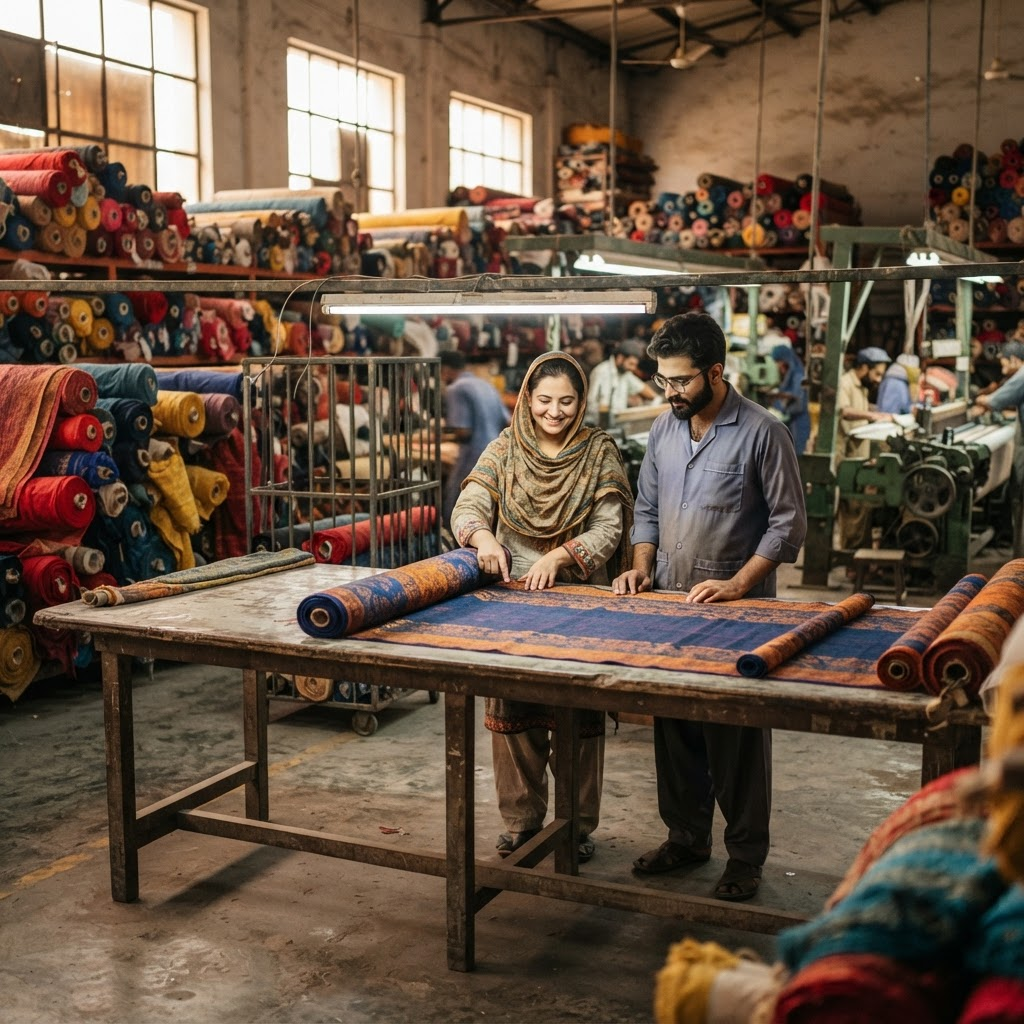
How to Find Verified Textile Exporters in Pakistan (2026 Buyer's Guide)
Pakistan is one of the world's largest textile exporters, with the sector contributing over 60% of the country's total export earnings and an annual export value of roughly $18 billion. For international buyers, sourcing agents, and retail brands, the challenge isn't finding *a* Pakistani textile supplier — it's finding the *right, verified* one for a specific product, quantity, and quality standard.
Where Pakistan's textile industry is concentrated
Pakistan's textile production is centered in four main hubs, each with a different specialty:
What to check before working with a Pakistani textile exporter
1. **Export track record** — ask for past shipment references or buyer names (with permission), not just a product catalogue.
2. **Certifications** — GOTS (organic), OEKO-TEX (chemical safety), ISO 9001 (quality management), and WRAP or BSCI (social compliance) are the most commonly requested by Western buyers.
3. **Minimum order quantities (MOQs)** — these vary hugely: yarn and fabric are often sold by weight/length (kg, meters) with MOQs in the thousands, while finished goods like towels or garments are priced per piece.
4. **Sample turnaround time** — a supplier that can't produce a sample within 2–3 weeks is a red flag for reliability at scale.
5. **Communication and documentation** — reliable exporters provide clear commercial invoices, packing lists, and are familiar with Incoterms (FOB, CIF, etc.).
Product categories available from Pakistani exporters
How TEP fits in
Textile Exporters Pakistan (TEP) maintains a growing directory of verified exporters and manufacturers across these categories and hubs, along with a live products marketplace listing fresh stock, leftover materials, and surplus inventory with transparent pricing and minimum order quantities. Buyers can browse by category and city, and exporters can register for free to be discovered by international buyers.
Frequently asked questions
How many textile exporters does Pakistan have?
Pakistan has thousands of registered textile exporters and manufacturers, ranging from large vertically integrated mills to specialized SMEs, spread mainly across Karachi, Faisalabad, Lahore, and Sialkot.
What is Pakistan's textile export value?
Pakistan's textile sector exports roughly $16–18 billion annually, making it the country's largest export industry and a major source of foreign exchange earnings.
What products can I source from Pakistani textile exporters?
Cotton yarn, woven and knitted fabric, denim, home textiles (towels, bed linen), garments, trims/accessories (zippers, buttons), and textile machinery are all available from Pakistani manufacturers.
Is it safe to source directly from a textile exporter in Pakistan without visiting?
Yes, if you verify certifications (OEKO-TEX, GOTS, ISO), request samples before bulk ordering, and use standard trade terms (Incoterms) and payment protections (e.g., letters of credit) common in international trade.
Related Articles
Textile Waste in Pakistan: The Circular Economy Opportunity Nobody's Fully Captured Yet
Pakistan's textile mills generate cotton, fiber, and fabric waste at every stage of production. Learn where it comes from, why it is valuable, and how TEP is connecting verified suppliers with circular economy buyers.
Terry & Bath Towel Manufacturers in Pakistan: A Buyer's Guide to Sourcing
Pakistan produces some of the world's most traded terry and bath towels. Learn how global buyers verify, compare, and source towel manufacturers and exporters through TEP's infrastructure.
How AI Technology Can Help You Build a Textile Export Business
Learn how AI can help Pakistani textile exporters find buyers, improve pricing, manage compliance, forecast demand, and scale global sales with TEP and AI employees.